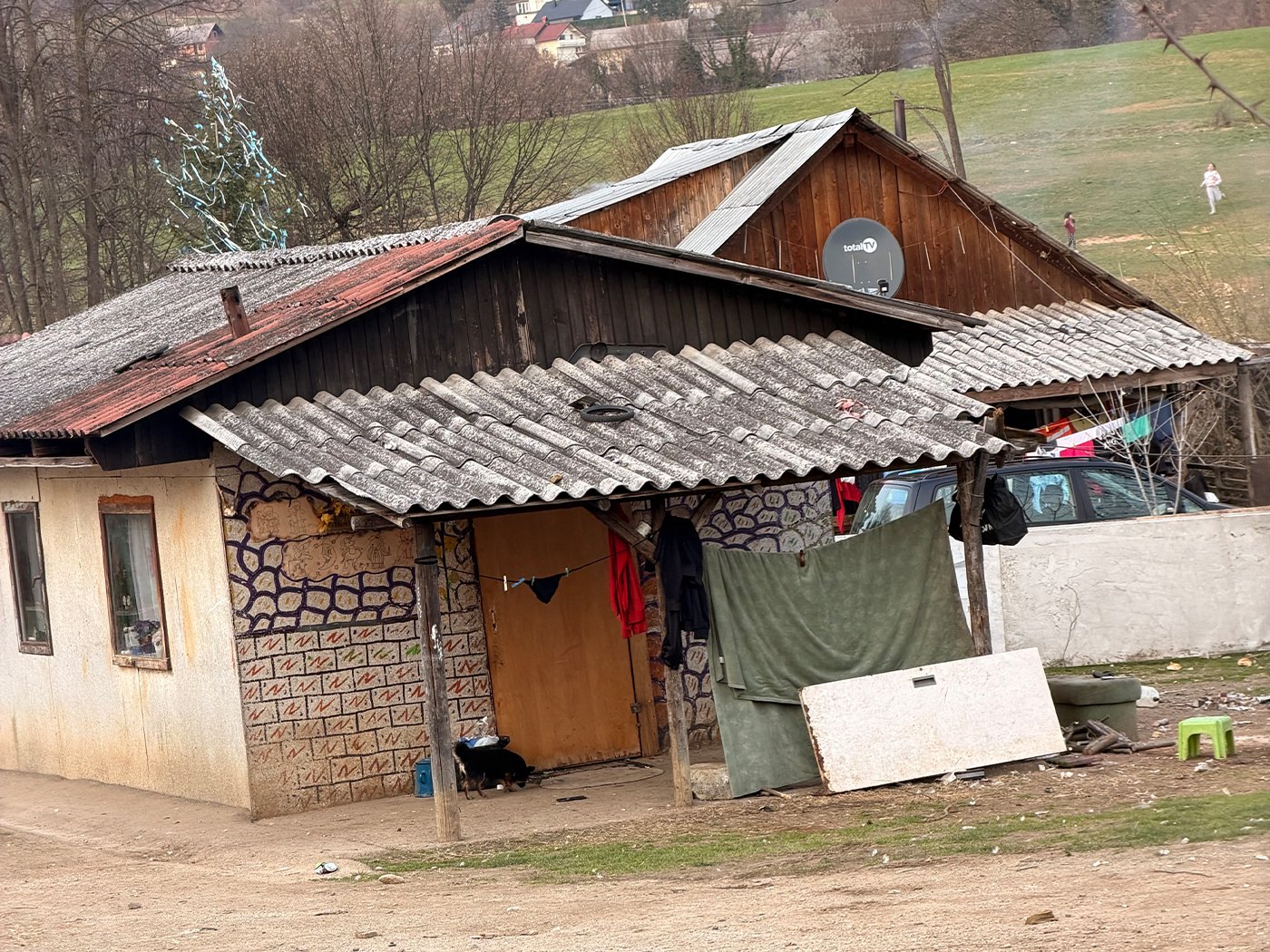
The outcome of Slovenia’s election highlights a broader shift in how political power is secured by Europe’s liberals and left. It raises questions that extend beyond one country, including how far such methods may spread and how European institutions respond.
Brussels, 25 March 2026 – The Roma Foundation for Europe warns that the outcome of Slovenia’s elections reflects not just a political result, but a dangerous shift in how power is secured and exercised by Europe’s liberals and left.
The election confirms that a liberal and left governing coalition can adopt measures based on collective blame, compress democratic procedure and frame a minority as a security issue—and be rewarded for it.
“This election did not draw a line against this approach to politics. It confirmed that it works,” said Mensur Haliti, Vice President of the Roma Foundation for Europe.
The so-called Šutar Law, adopted last year in a matter of days, introduced extraordinary measures singling out the country's 8,000‒12,000 Roma and reshaped the political landscape ahead of the election. What was presented as a response to a security concern was in fact a political calculation: a law-and-order agenda was pre-empted to deny political space to the far-right opposition—and the outcome shows that it worked.
Democratic erosion here does not come from institutional breakdown, but from left-leaning governments deciding that adopting such methods carries fewer risks than losing power and being proven right.
The outcome also clarifies responsibility. Right-wing populist Janez Janša lost the election. But the model of governance associated with him—crisis as political opportunity, the undermining of established democratic procedures and the use of collective blame—was legitimised, implemented and rewarded by a centre-left government.
“The question is no longer whether these tactics are acceptable for centre-left, European values. It is whether they deliver results. In Slovenia, they did,” Haliti said.
This establishes a new baseline. When collective punishment, crisis governance and the targeting of a minority produce electoral gains, they cease to be fringe positions. They become tools of liberal politics.
The political consequences follow directly. Pressure increases on liberal actors to demonstrate that they can be equally “tough”, including towards Roma. Rather than containing the far right, this dynamic expands the space in which it operates.
In a race decided by less than one percentage point, the Šutar Law may have provided the decisive advantage for Prime Minister Robert Golob’s re-election. The result now raises a concrete question: whether measures introduced under pressure will remain once that moment has passed.
The election is over, and the Constitutional Court challenge provides cover for a rollback without losing face. But there are strong indications it will remain. Emergency action has become precedent. What was introduced under pressure has become standard practice.
The implications extend beyond Slovenia. At the European level, the case exposes a structural blind spot. EU attention intensified following the Black Cube incident, involving allegations of foreign interference targeting political actors. By contrast, the adoption of the Šutar Law—with clear implications for minority rights and democratic standards—drew limited scrutiny.
European frameworks are designed to detect explicit violations, such as attacks on courts or media, and to respond to external interference. They are less equipped to address how governments use democratic systems themselves to legitimise collective blame and secure electoral advantage.
The result is a gap between what European institutions are prepared to confront and what is actually happening. The Slovenian case makes that gap all too visible.
“As Golob prepares to form his next government, this leaves a direct question for the European Union,” Haliti said. “If the EU mobilises against foreign actors who target and surveil its politicians, but remains silent when a member state weaponises collective blame for electoral advantage, then what exactly are European institutions protecting?”

Roma Foundation for Europe
The latest

The Conditional Belonging of Bulgaria’s Roma
Unregistered, Uncompensated, Unbroken

EU Budget Tracking Rules Name Roma but Still Cannot Say Whether Their Lives Improve, Roma Foundation for Europe says
Browse by category
Campaigns
Events
Facts
Press
Voices
For media inquiries:
[email protected]Sign up here so you don’t miss out on campaign updates, upcoming events and other news from the Roma Foundation for Europe and our network.
Sign up for our newsletter